


Gunjan Krishna Appointed Joint Secretary, Fisheries Department, on Deputation to Centre
IAS officer Gunjan Krishna of the Karnataka cadre has been appointed Joint Secretary in the Department of Fisheries on a five-year central deputation.

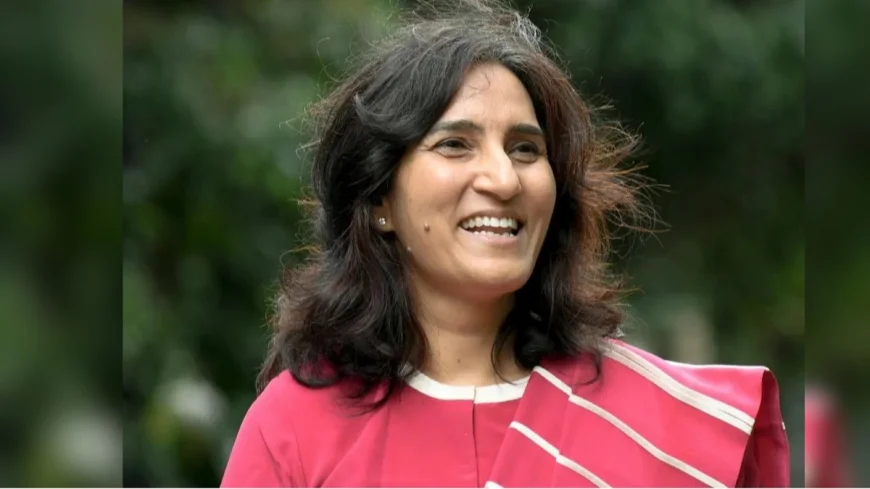
Gunjan Krishna, a 2004-batch IAS officer of the Karnataka cadre, has been appointed Joint Secretary in the Department of Fisheries for a tenure of five years on deputation to the central government, as per the state's release order.
The Department of Fisheries operates under the Ministry of Fisheries, Animal Husbandry and Dairying, a ministry carved out as a standalone department in 2019 to give India's fisheries sector dedicated policy attention. It administers the Pradhan Mantri Matsya Sampada Yojana, the flagship scheme for fisheries infrastructure and aquaculture development, along with the Fisheries and Aquaculture Infrastructure Development Fund. A Joint Secretary here typically oversees state-level scheme implementation, coastal and inland fisheries coordination, and export policy for marine products. The department also coordinates the Kisan Credit Card extension to fish farmers and monitors India's marine exports, which have grown into one of the larger contributors to the country's agricultural export basket, led chiefly by frozen shrimp shipments to the United States and Southeast Asia.
Krishna, from the 2004 batch, has completed roughly two decades in the IAS, placing her at the seniority level where officers become eligible for Joint Secretary empanelment under the Central Staffing Scheme. Karnataka-cadre officers of this batch range have increasingly moved into central postings covering economic ministries, a pattern consistent with the cadre's administrative exposure to sectors such as agriculture marketing, food processing, and coastal development in districts like Dakshina Kannada and Udupi.
Krishna's release to the Centre was processed by the Karnataka government through its General Administration Department, the nodal state authority that clears officers for deputation once a central ministry raises a requisition through the DoPT. Central deputations of this kind typically begin as a five-year term, renewable if both the state and the ministry concerned agree the officer should continue beyond the initial period.
Her appointment comes in the same cycle as that of Karnataka cadre-mate Imkongla Jamir M., who has been deputed to the Department of Consumer Affairs, suggesting the Centre drew on the same batch of empanelled Karnataka officers to fill simultaneous Joint Secretary vacancies. Such coordinated deputations are routine when multiple ministries clear vacancies in the same DoPT cycle.
India's fisheries sector, valued as one of the fastest-growing components of the agricultural economy, faces persistent challenges around cold-chain infrastructure, deep-sea fishing regulation, and compliance with export markets in the European Union and the United States, which enforce strict traceability norms on marine exports. Krishna will step into a department under pressure to show measurable progress on the Sampada scheme's infrastructure targets, which include building fishing harbours, cold storage capacity, and modern fish-landing centres across the country's roughly 8,100-kilometre coastline.
The department has also been pushing states to adopt uniform registration systems for fishing vessels and deep-sea fishing permits, an area where coordination between coastal states and the Centre has historically been uneven, contributing to disputes over fishing rights in contested maritime zones. A Joint Secretary in this role often finds themselves mediating between state fisheries departments and the Centre's broader policy push toward sustainable, regulated deep-sea fishing practices, a mediating function that has grown more demanding as satellite-based vessel tracking has made enforcement of maritime boundary rules considerably more visible to regulators and the fishing community alike.
Krishna's five-year term runs from the date she takes charge in Delhi, with the Fisheries Department expected to notify her specific portfolio assignment once she reports.