


Bank of India MD Rajneesh Karnatak Calls for Deeper Credit Penetration in Supply-Chain Finance
Bank of India MD & CEO Rajneesh Karnatak said only 30% of e-way bills generated in July were funded by financial institutions, at FIBAC's valedictory session.

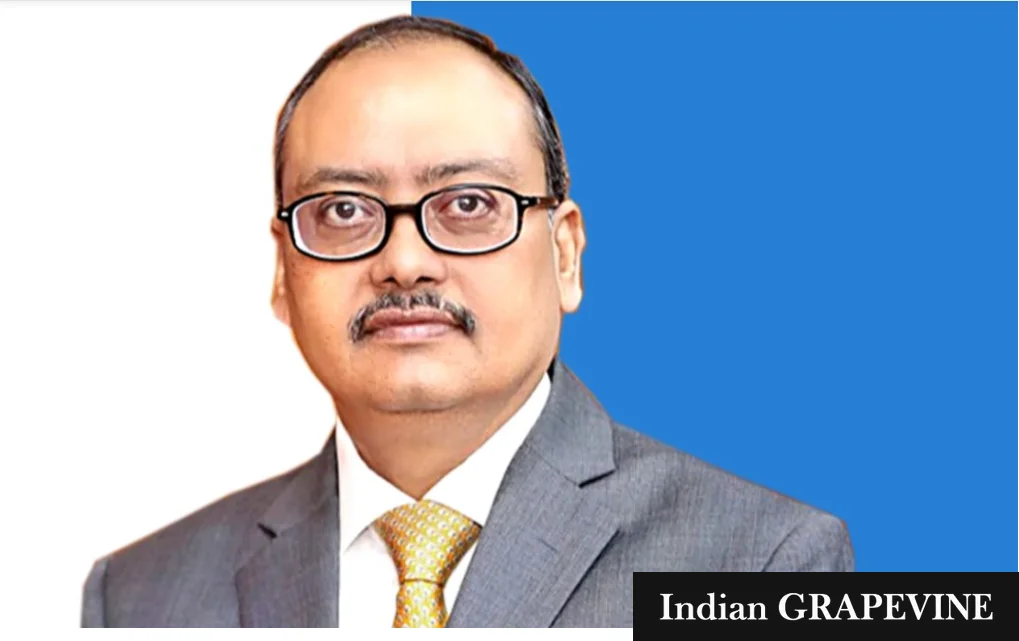
Rajneesh Karnatak, Managing Director and Chief Executive Officer of Bank of India, told the valedictory session of FIBAC on ""India's Financial Institutions for Viksit Bharat"" that scheduled commercial banks have a critical role to play in financing India's growth, while flagging that credit remains costlier than it should be given rising funding, technology and operating costs across the sector.
FIBAC, jointly organised by the Federation of Indian Chambers of Commerce and Industry and the Indian Banks' Association, is one of the largest annual gatherings of bank leadership in the country, and its valedictory session is typically used by senior bankers to set out priorities for the sector heading into the next financial year. Karnatak's remarks focused on where banks are leaving credit demand unmet, particularly in supply-chain finance linked to the Goods and Services Tax network.
Karnatak pointed to a specific gap in institutional lending: of nearly 14 crore e-way bills generated in July, only around 30 percent were funded by financial institutions, which he said pointed to significant scope for banks and non-banking financial companies to deepen their presence in invoice discounting and supply-chain credit. Bank of India's own loan book is roughly 20 percent digital at present, a figure Karnatak used to illustrate how far even a large public sector lender has to go in digitising its lending pipeline.
Karnatak has spent close to three decades in public sector banking, having served as Chief General Manager of Punjab National Bank before his appointment as Executive Director of Union Bank of India in October 2021. He moved to Bank of India as Managing Director and Chief Executive Officer in 2023, with a background concentrated in corporate credit, having earlier headed large corporate credit branches and the credit monitoring division at Oriental Bank of Commerce before its merger into Punjab National Bank. He holds a Master of Commerce degree and is a certified associate of the Indian Institute of Bankers.
At Union Bank of India, Karnatak's tenure as Executive Director focused on portfolio management and operational efficiency during a period when public sector banks were working through the aftermath of the asset quality review cycle. His move to Bank of India came as the lender was rebuilding its balance sheet, and he has since overseen an expansion of the bank's retail, agriculture and MSME lending, more than half of which is now routed through rural and semi-urban branches.
Karnatak's FIBAC remarks fit into a broader pattern among public sector bank chiefs this year, who have increasingly used industry forums to push for faster digitisation while cautioning that rural and semi-urban India still needs assisted banking rather than purely digital channels. He called for responsible adoption of artificial intelligence in banking operations and for Indian banks to strengthen their presence in international credit and liability markets; Bank of India currently operates in 15 countries.
Karnatak closed his remarks by describing a banking sector that combines technology with in-person service, expands credit access and strengthens India's connectivity to global capital markets as the model needed to support the country's transition to a developed economy by 2047.
Bank of India's board has backed a similar approach under Karnatak's leadership, expanding branch presence in semi-urban and rural markets even as it invests in digital lending infrastructure, a strategy he referenced in his FIBAC remarks when he described assisted banking as necessary for reaching customers new to formal credit. His comments are likely to inform how the bank positions its supply-chain finance offerings, given the data he cited on unfunded e-way bills.