


NTA Has Run Understaffed Since Its 2017 Launch, Records Show
The National Testing Agency has operated without full sanctioned staff strength since its 2017 launch, relying heavily on contractual personnel.

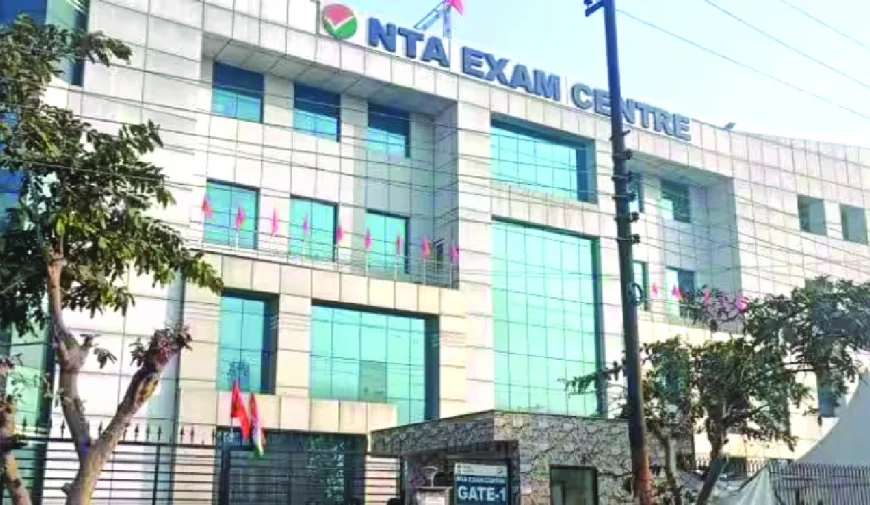
The National Testing Agency has never achieved its full sanctioned staff strength since it began operations in July 2017, according to information on the agency's staffing history, with day-to-day functioning relying heavily on contractual personnel rather than permanent government employees on its own rolls.
The NTA was set up as a premier, specialist and self-sustained testing organisation to conduct entrance examinations for admission and fellowship programmes at higher educational institutions, taking over responsibility for exams that were previously run directly by bodies such as the Central Board of Secondary Education. It now conducts the Joint Entrance Examination Main and the National Eligibility cum Entrance Test for undergraduate medical admissions twice a year, along with the National Eligibility Test, the Common Management Admission Test and the Common Pharmacy Admission Test, exams that collectively determine admission for several million candidates annually across engineering, medical and postgraduate programmes nationwide.
Vineet Joshi was appointed as the agency's first Director-General when it was established in 2017, bringing prior experience from his earlier tenure as chairman of the Central Board of Secondary Education, where he had overseen large-scale examination logistics for board exams affecting millions of students. From 2025 onward, the agency expanded its mandate to cover a wider set of entrance and recruitment tests for higher-education institutions and government bodies, adding further to the workload carried by an organisation that has run on a thin permanent staff base since inception.
The agency's structure was designed around a lean permanent core supported by outsourced and contractual staff for exam-cycle operations, a model intended to keep the organisation self-sustained through examination fees rather than dependent on regular budgetary support from the government. In practice, the permanent cadre has remained limited even as the volume and frequency of examinations under its charge has grown substantially since 2017, with each new exam added to its calendar placing additional strain on the same core staff.
The staffing gap has drawn renewed attention following controversies around NEET-UG administration in recent examination cycles, controversies that have put pressure on the agency's operational capacity during peak examination periods when scrutiny of its processes runs highest. Understaffing at a body responsible for exams that determine admission for millions of candidates each year raises questions about the sustainability of its current organisational model as its examination calendar has continued to expand without a matching expansion in permanent staff.
The Ministry of Education, under which the NTA functions as an autonomous body, has periodically reviewed the agency's staffing structure, though a permanent recruitment drive matching its full sanctioned strength has not been completed in the years since its establishment. The agency's expanded 2025 mandate, covering additional recruitment tests beyond its original remit, has added further load to an organisation still working through this longstanding staffing gap between sanctioned and actual strength.
The NTA continues to conduct its full examination calendar using its existing mix of permanent and contractual staff, with no announced timeline yet for closing the sanctioned-strength gap that has persisted since the agency's founding in July 2017.
Comparable examination bodies in other countries typically maintain a much larger proportion of permanent technical and administrative staff relative to their annual candidate volumes, a contrast that has been raised in past parliamentary discussions on the agency's functioning. The NTA's own governing structure includes a board of governors drawn from academic and government backgrounds that reviews the agency's operational plans, though staffing strength has remained a recurring item flagged in these periodic reviews without a corresponding permanent recruitment expansion following through.