


Manepalli Sridhar Recommended as Director (HR), BHEL
PESB recommends Manepalli Sridhar, currently Executive Director (HR) at BHEL, for the board-level post of Director (Human Resources) at the company.

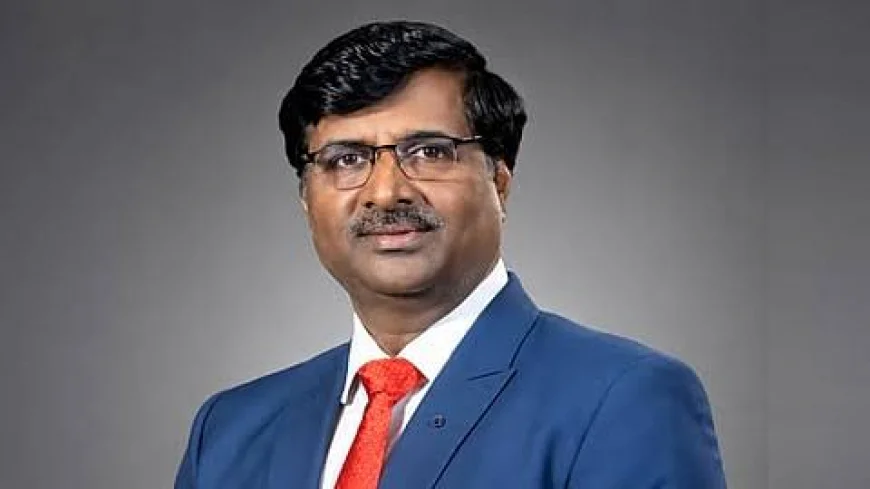
The Public Enterprises Selection Board has recommended Manepalli Sridhar, currently Executive Director (Human Resources) at Bharat Heavy Electricals Limited, for elevation to the board-level post of Director (Human Resources) at the company.
Director (HR) at BHEL is one of the functional director positions on the board of India's largest power equipment manufacturer, a Maharatna central public sector enterprise operating under the Ministry of Heavy Industries. The role carries responsibility for workforce planning, industrial relations, and talent management across BHEL's network of manufacturing units and project sites, a workforce that has historically numbered in the tens of thousands across its heavy engineering plants in Haridwar, Bhopal, Trichy, and Hyderabad.
Sridhar's elevation follows the standard PESB process, under which the board interviews a shortlist of eligible candidates — typically Executive Directors from within the company or comparable central PSUs — before recommending a name to the administrative ministry for final approval by the Appointments Committee of the Cabinet. Moving from Executive Director to board-level Director is considered a significant internal promotion within a Maharatna company, reflecting an established track record at the general manager and executive director levels of BHEL's HR function. The selection process for functional director posts at Maharatna and Navratna PSUs typically spans several months, with the PESB inviting applications, screening eligibility against experience benchmarks, and conducting interviews before recommending a single name for each vacancy to the concerned ministry. For HR-specific director roles, the PESB places particular weight on a candidate's track record managing large-scale industrial relations, given that labour disputes at manufacturing-heavy PSUs like BHEL can directly affect production schedules and delivery commitments to both government and export customers. This weighting reflects lessons drawn from past instances where prolonged industrial action at central PSU plants disrupted delivery timelines on major government contracts, prompting the PESB to place greater emphasis on demonstrated negotiation and dispute-resolution experience for HR-track candidates.
As Executive Director (HR), Sridhar would have overseen policy for one of the more complex industrial relations environments among central PSUs, given BHEL's large unionised workforce spread across multiple states and its history of periodic labour negotiations tied to wage revision cycles governed by the Department of Public Enterprises' pay guidelines for PSU employees.
His appointment comes as BHEL works through a period of order-book recovery following years of subdued capital expenditure in the thermal power sector, even as the company diversifies into defence manufacturing, railway equipment, and renewable energy components — a diversification that brings new demands on workforce reskilling and recruitment that will fall partly within the HR director's remit. BHEL has in recent years secured large thermal equipment orders tied to the government's renewed push for coal-based capacity addition to meet peak summer demand, alongside a growing order book in the defence and rail segments, both of which require specialised technical hiring distinct from the company's traditional power-equipment workforce.
The Director (HR) post requires managing not just recruitment and industrial relations but also succession planning across BHEL's technical cadre, an increasingly pressing concern as a significant share of the company's senior engineering workforce approaches retirement over the coming decade. BHEL's plants also operate under multiple state-specific labour regulations given their spread across Uttarakhand, Madhya Pradesh, Tamil Nadu, and Telangana, requiring the HR function to manage compliance variations that a single-state manufacturer would not face.
The PESB's recommendation now goes to the Ministry of Heavy Industries for vetting before final clearance by the Appointments Committee of the Cabinet, the standard final step for board-level appointments at central public sector enterprises.