


Committee deliberates on Strengthening Human–Wildlife Conflict Mitigation through Technology, Community Participation and Coordinated National Action
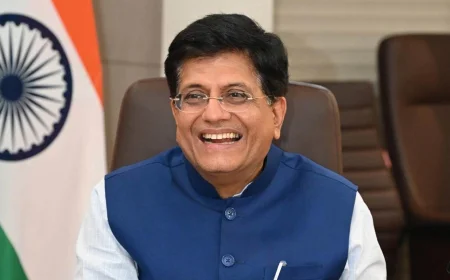
The Parliamentary Consultative Committee of the Ministry of Environment, Forest and Climate Change met today in New Delhi, under the Chairmanship of the Union Minister for Environment, Forest and Climate Change, Shri Bhupender Yadav. The agenda of the meeting was to deliberate on the issue of Human–Wildlife Conflict (HWC) and the measures required for strengthening prevention, mitigation and long-term coexistence between people and wildlife. Dignitaries in attendance included Union Minister of State (EFCC), Shri Kirti Vardhan Singh, along with Members of Parliament as part of the Committee, besides senior officers of the Ministry, PCCFs and Chief Wild Life Wardens of participating States.

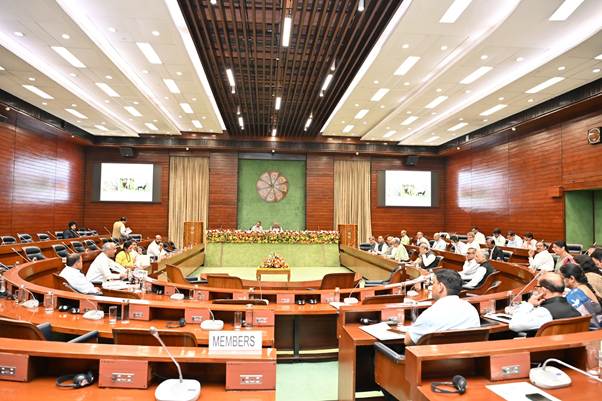
The Parliamentary Consultative Committee of the Ministry of Environment, Forest and Climate Change met today in New Delhi, under the Chairmanship of the Union Minister for Environment, Forest and Climate Change, Shri Bhupender Yadav. The agenda of the meeting was to deliberate on the issue of Human–Wildlife Conflict (HWC) and the measures required for strengthening prevention, mitigation and long-term coexistence between people and wildlife. Dignitaries in attendance included Union Minister of State (EFCC), Shri Kirti Vardhan Singh, along with Members of Parliament as part of the Committee, besides senior officers of the Ministry, PCCFs and Chief Wild Life Wardens of participating States.
The Committee was apprised of the follow-up action taken on the directions issued during its previous meeting held on 18.12.2025. These included consultations by States and Union Territories with Members of Parliament from conflict-affected areas. During the meeting, the Ministry highlighted that conflict patterns vary across landscapes, with human–elephant conflict being predominant in several States, while conflicts involving tigers, leopards, bears, rhinoceroses, wild boars, gaurs, primates and other species require location-specific management approaches.
The Committee was informed about the establishment of the Centre of Excellence on Human–Wildlife Conflict (CoE-HWC) at SACON, WII South Centre, Coimbatore, announced by the Prime Minister of India, during the 7th National Board for Wildlife meeting. The Centre has been established as a national institution for scientific research, technological innovation, policy support, capacity building and community-centred approaches for effective management of human–wildlife conflict. The Committee also noted the launch of the National Human–Wildlife Conflict Portal on 10.07.2026, as a unified digital platform for recording conflict incidents, data management, knowledge sharing and decision support. Further, it was informed that the Regional Action Plan (RAP) on Elephant Conservation for South India has been approved.
Presentations were made by the States of Assam, Karnataka, Kerala, Madhya Pradesh, Uttarakhand and Uttar Pradesh, highlighting their conflict scenarios, mitigation measures, community participation initiatives, use of technology, institutional mechanisms and recommendations for strengthening national efforts. The experiences presented underscored the importance of landscape-specific planning, rapid response systems, habitat improvement, protection of wildlife corridors, scientific monitoring, early warning systems, community engagement and inter-State coordination.
The discussions emphasised that effective management of human–wildlife conflict requires an integrated approach combining ecological conservation with protection of human lives and livelihoods. Members deliberated upon the use of modern technologies including GIS, artificial intelligence, drones, radio telemetry and predictive analytics, while also stressing the importance of strengthening frontline capacity, improving compensation delivery, enhancing public awareness and promoting community participation in conservation.