


GOBARdhan Handbook unveiled and Unified GOBARdhan Portal launched to support streamlined implementation of the Scheme
Hardeep Singh Puri, yesterday launched GOBARdhan, the Central Sector Scheme for development of the Compressed Biogas (CBG) sector.

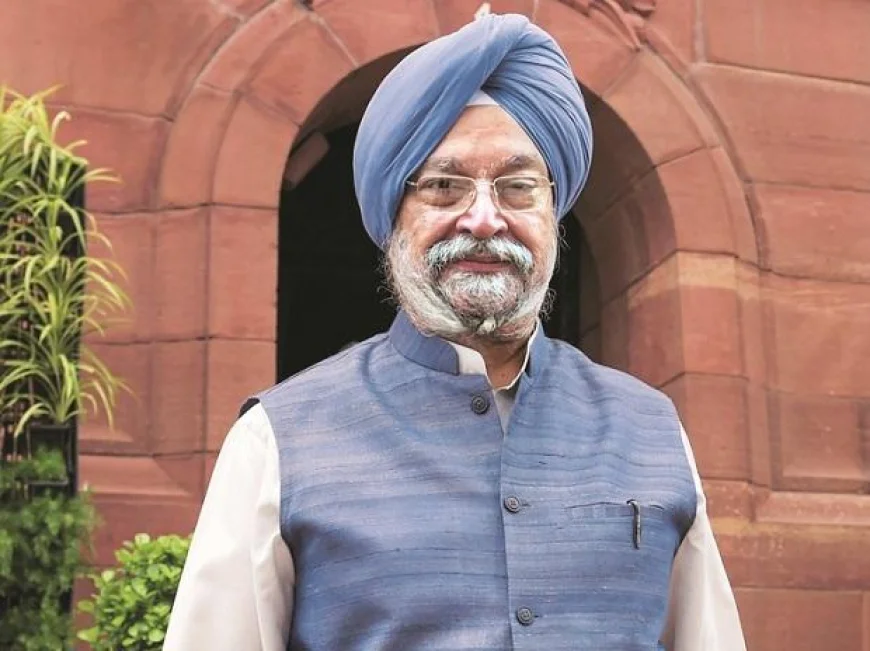
Hardeep Singh Puri, yesterday launched GOBARdhan, the Central Sector Scheme for development of the Compressed Biogas (CBG) sector.
The Scheme, approved by the Union Cabinet on 6 August 2026 with an outlay of ₹23,731 crore, provides a ten-year framework from FY 2026–27 to FY 2035–36 for accelerating CBG development in India. The scheme aims to increase domestic CBG production nearly 10-fold (to around 5 MMSCMD) with a long-term framework that gives investors and lenders greater certainty.
The launch brought together stakeholders from across the CBG ecosystem, including representatives of Central Ministries, State Governments, CBG developers, oil and gas companies, City Gas Distribution entities, financial institutions, cooperatives, technology providers and other stakeholders.
The launch featured the unveiling of the GOBARdhan Handbook, a comprehensive reference guide to assist stakeholders, project developers, State Governments and financial institutions in understanding the Scheme and navigating its CBG interventions, alongside the Unified GOBARdhan Portal, a centralised digital platform designed to streamline applications, eliminate multi-channel processes and enhance transparency throughout processing and implementation.
Speaking on the occasion, Shri Hardeep Singh Puri said that India’s growing energy requirements must be addressed through the combined objectives of availability, affordability and sustainability, with greater development of energy resources available within the country.
He said that CBG has particular relevance for India as it can convert crop residue, cattle dung and other organic resources into clean domestic energy, while generating organic manure and creating new economic opportunities in rural areas. Farmers, cooperatives, gaushalas and local enterprises can participate across feedstock collection, aggregation, transportation and processing, strengthening the circular link between agriculture and energy.